



Technology
Mercedes-Benz Develops Holographic Displays and New 800-Volt Technology for Electric Vehicles
Image: (c) Mercedes-Benz
Mercedes-Benz has unveiled new research and development projects aimed at improving communication between vehicles and their surroundings, as well as the efficiency of electric powertrains. The focus is on intelligent LED displays integrated into vehicle windows, holographic displays in the windshield, and a new type of power converter for 800-volt applications. The technologies are still under development and are expected to open up new possibilities for safety, information displays, and energy management.
LED Technology Enables Communication with Other Road Users
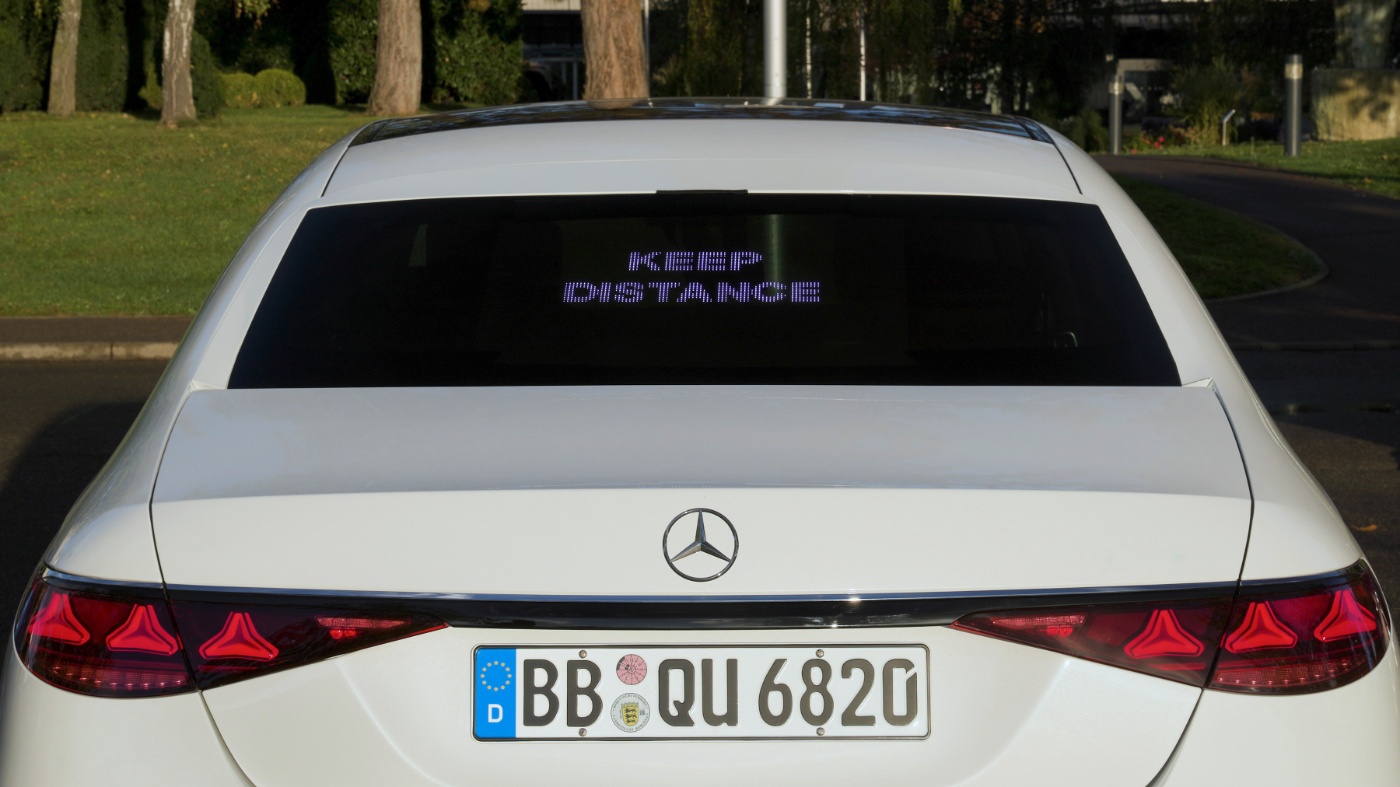
According to Mercedes-Benz, the company is working on integrating LED display elements directly into vehicle windows. In the future, these could display warnings, safety symbols, or traffic-related information, for example, in the rear window.
Two different technologies are being considered: Mini-LEDs are suitable for larger display areas and could be used to display brake lights or warning symbols, among other things. Micro-LEDs, on the other hand, enable high-resolution visuals on smaller surfaces, such as animations.
The display elements are designed to be integrated directly into the laminated glass and remain virtually invisible when no information is being displayed. This would create additional communication options without significantly altering the vehicle's design.
Holographic Display Turns Windshield into an Information Screen
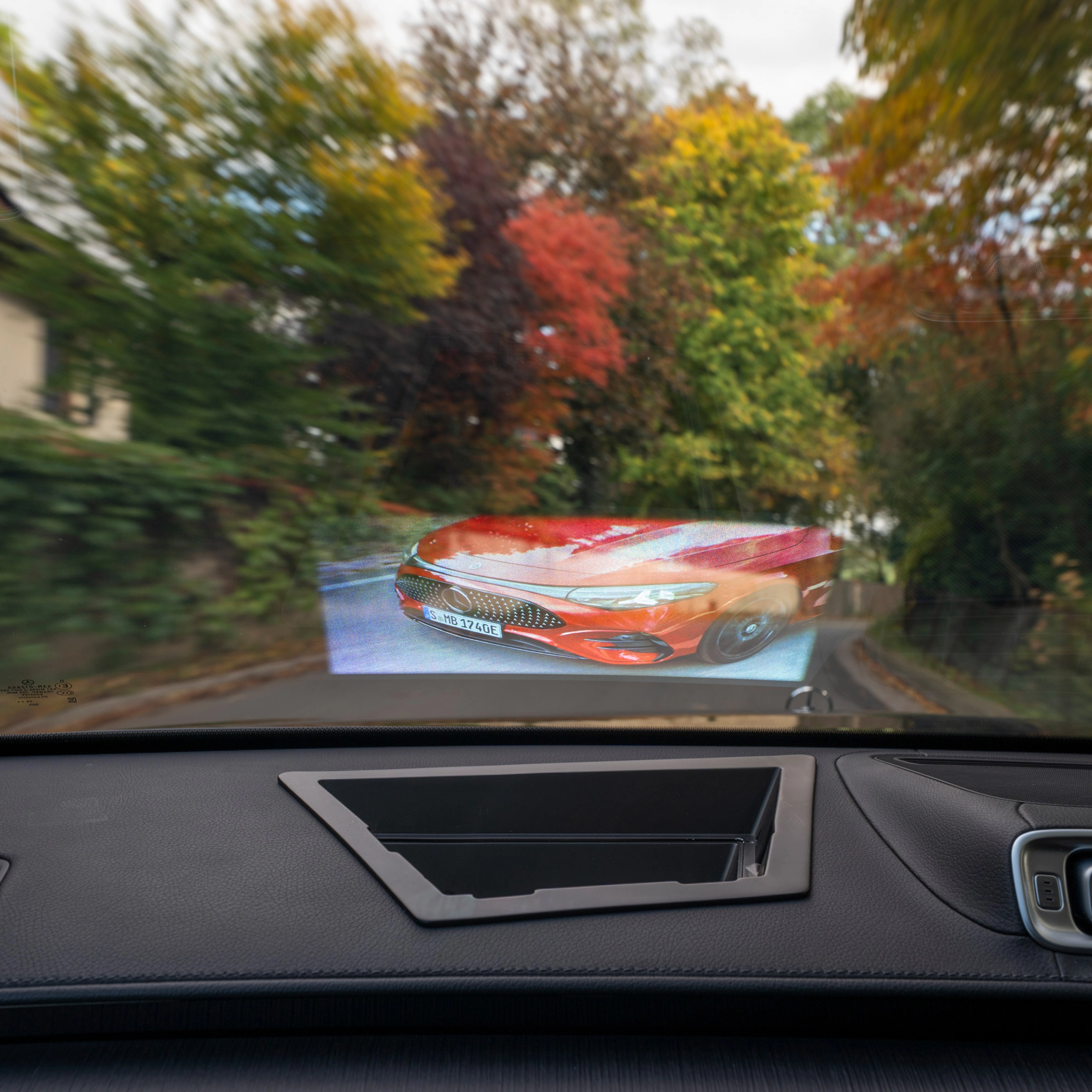
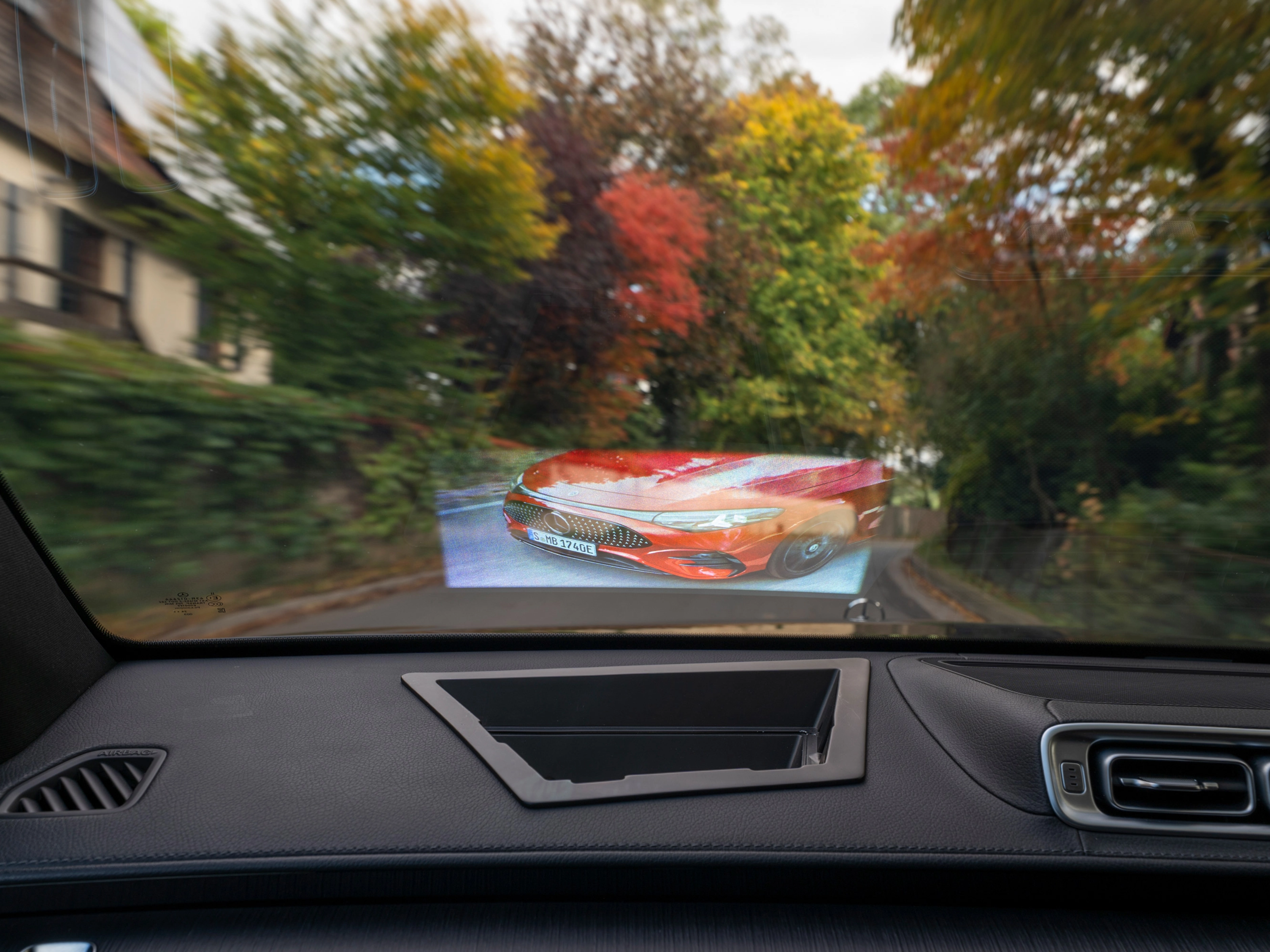
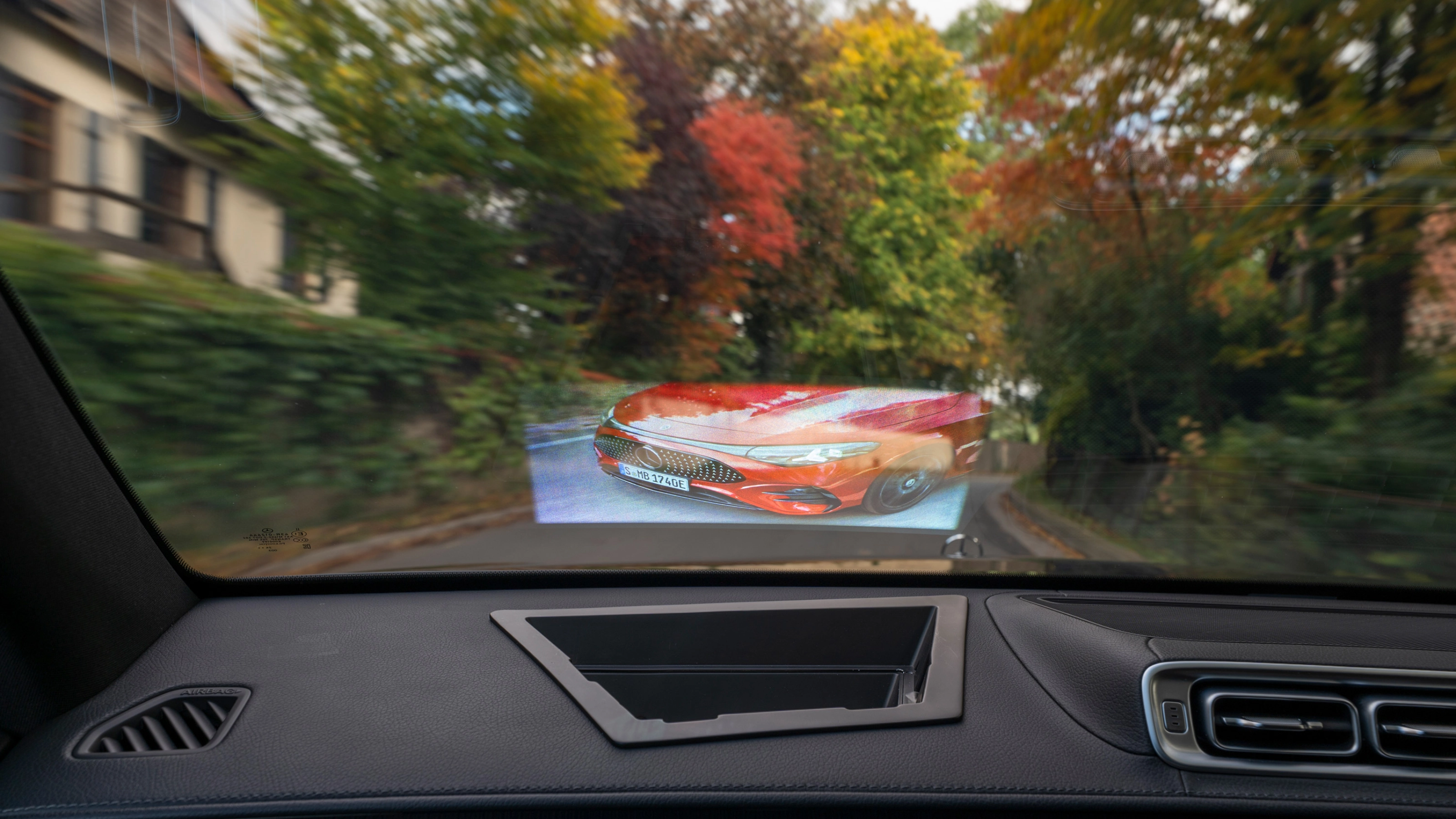
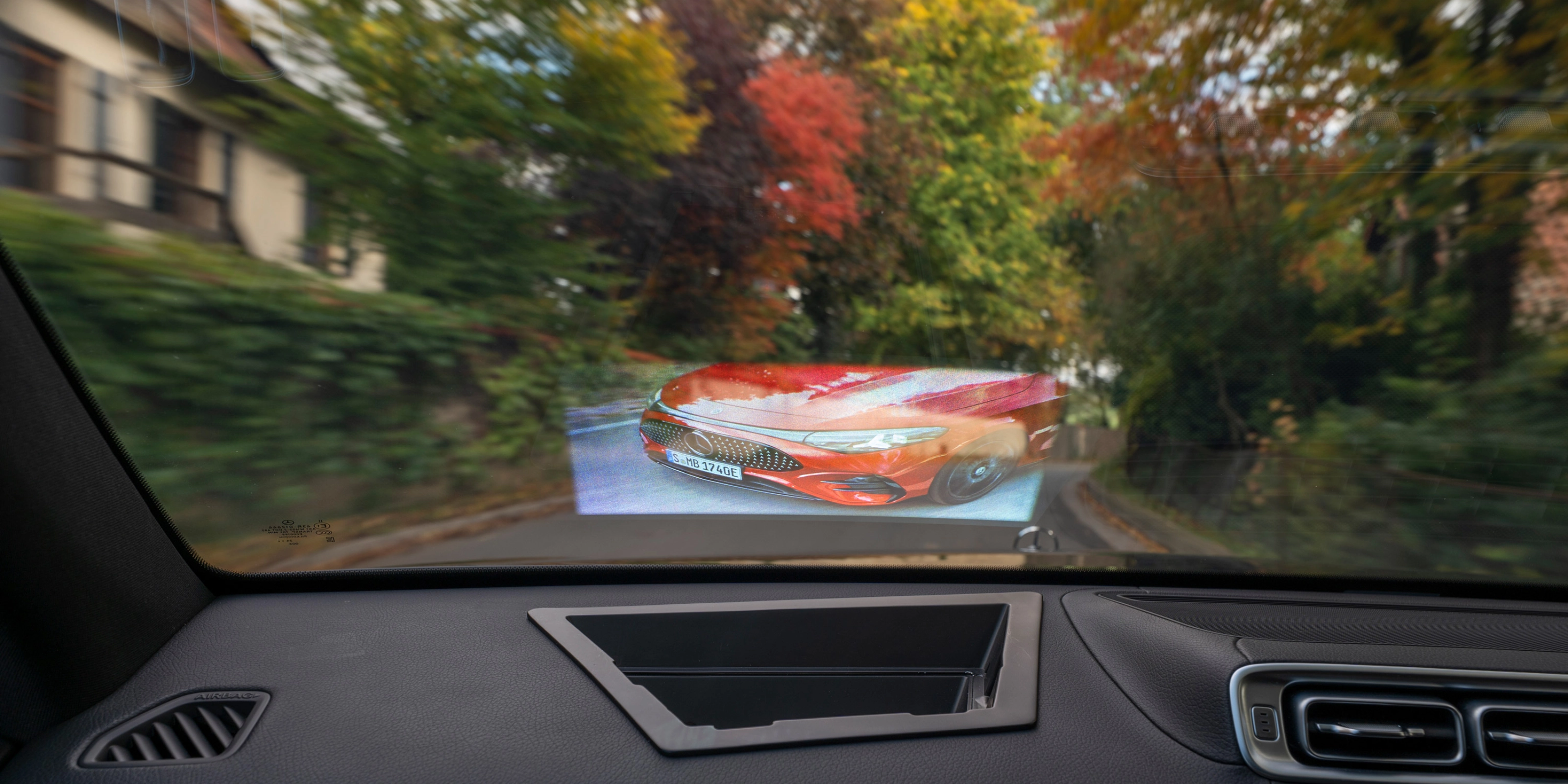
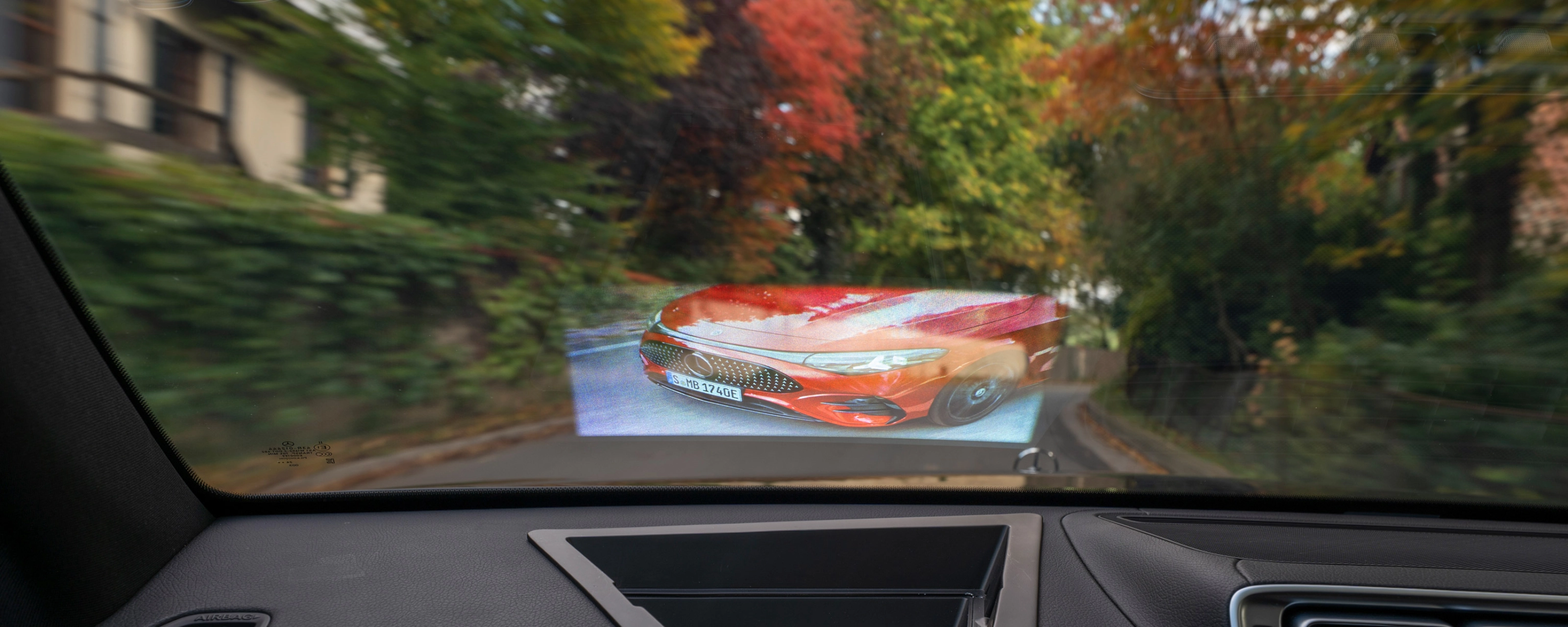
Another development project involves a holographic display that makes information visible directly on the windshield.
A device in the dashboard projects content onto a special transparent film embedded in the glass. Holographic optical elements are designed to selectively reflect specific wavelengths of light, ensuring that the display remains visible even in direct sunlight.
The technology is also intended to enable different content to be displayed for the driver and front passenger. By limiting viewing angles, navigation information could be shown on the driver's side while entertainment content appears on the passenger's side, without both occupants seeing the same images.
Mercedes-Benz identifies navigation, driving information, points of interest, video calls, and movies as potential applications. Content would appear only when needed.
New Power Converter Enables Flexible 800-Volt Architectures
At the same time, Mercedes-Benz is developing a power converter that can control energy flows from individual battery cells or groups of cells using programmable microconverters.
The technology is designed to provide a constant high-voltage output of up to 800 volts, regardless of the state of charge or aging of individual battery cells. The current development generation delivers up to 3 kW of power and supports both AC and DC applications.
Thanks to its modular design, multiple power converters can operate in parallel, allowing the total power output to be adjusted to different requirements. At the same time, the technology could combine previously separate power electronics functions into a single hardware system.
In the long term, Mercedes-Benz sees potential for more compact and efficient battery and powertrain systems. The technology could also support bidirectional charging, including Vehicle-to-Home and Vehicle-to-Grid applications.
Mercedes-Benz has not yet provided specific details on when the three technologies might be introduced in production vehicles.