








IAA MOBILITY Weekly
The Mobility Highlights of Week 43/2026
NVIDIA, General Motors, CREED
- IAA MOBILITY Weekly
- 43/2026

NVIDIA is expanding its partnerships with European automakers and mobility providers in autonomous driving, General Motors is developing a new vehicle architecture with 40 times more computing power and AI capabilities, and the European research project CREED is exploring how electric vehicles, heat pumps, and battery storage systems could help stabilize power grids in the future. These are our top stories for week 43 of 2026.
NVIDIA is expanding its partnerships with European automakers and mobility providers in autonomous driving, General Motors is developing a new vehicle architecture with 40 times more computing power and AI capabilities, and the European research project CREED is exploring how electric vehicles, heat pumps, and battery storage systems could help stabilize power grids in the future. These are our top stories for week 43 of 2026.
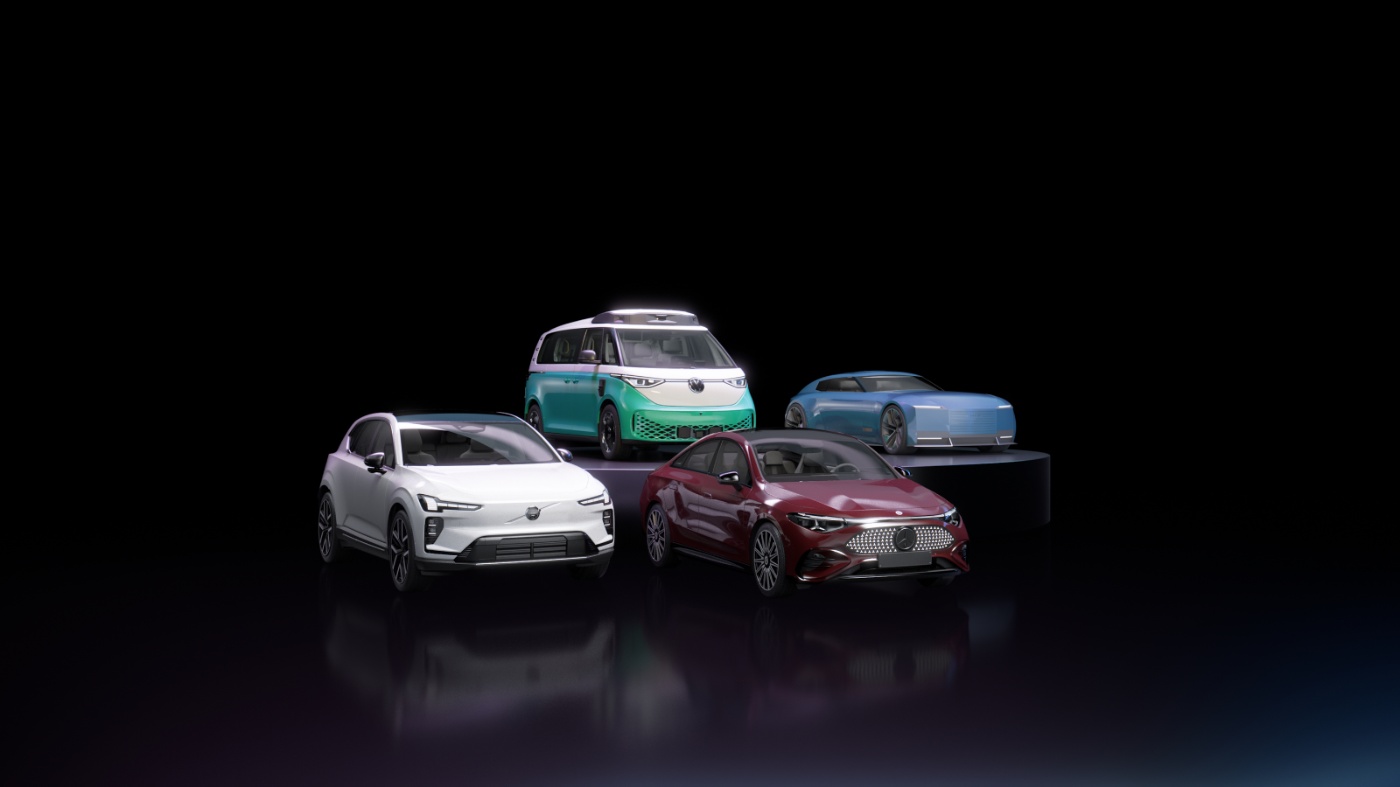
NVIDIA is expanding its partnerships with European automakers and mobility providers in autonomous driving. In Berlin, the US technology company showcased new applications of its NVIDIA Hyperion platform, which provides a common computing and sensor architecture for automated driving systems. The technology supports the development of Level 3 and Level 4 driving capabilities. Partners include Mercedes-Benz, Volkswagen Commercial Vehicles, Volvo Cars, and Bolt. Mobility provider Bolt plans to use NVIDIA's Alpamayo Stack software platform for its European robotaxi program, initially in future Lucid vehicles.
Mercedes-Benz aims to further develop highly automated and autonomous driving capabilities in collaboration with NVIDIA and expects to receive regulatory approval in Germany soon for MB.DRIVE ASSIST PRO, its point-to-point urban driving assistance system. Volkswagen Commercial Vehicles presented the autonomous ID. Buzz AD equipped with NVIDIA Hyperion, while Volvo Cars plans to combine the platform with its own safety and vehicle technologies. Swedish company Einride is also adopting NVIDIA technology for the next generation of its autonomous truck driving system. Additional applications for autonomous public transportation are being developed in collaboration with TIER IV and the Technical University of Munich.
At the same time, NVIDIA introduced Halos SAFE, a new framework for evaluating autonomous vehicle safety that aims to combine simulations, test bench testing, and real-world driving tests. The company also unveiled new AI tools, including Alpamayo 2 Edge, designed to analyze traffic situations and plan driving maneuvers, and the Alpamayo Agentic Factory development environment, which is scheduled for release in early 2027. Porsche is also working on a data-driven development platform using NVIDIA technologies and Microsoft Azure, with the aim of significantly reducing physical test drives and development times.
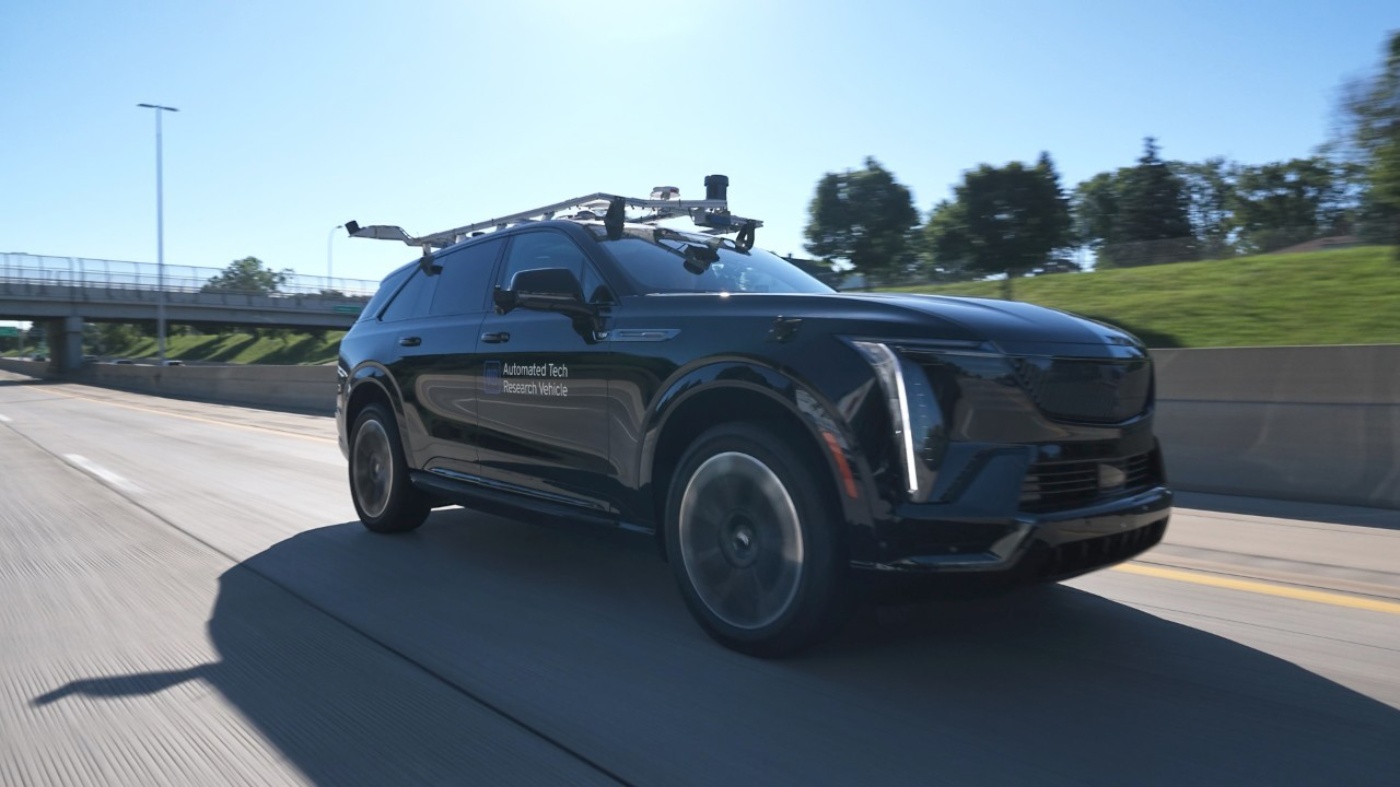
General Motors (GM) has unveiled a new generation of vehicle technologies designed to combine more powerful batteries, more compact electric drive units, and a centralized electronic architecture. For its future batteries, GM is focusing on lithium-manganese-rich (LMR) technology, which is expected to improve the balance between driving range and battery costs. At the same time, redesigned electric motors and power electronics are intended to reduce the number of required components by 40%.
At the heart of the new architecture is a Central Compute Unit (CCU), which consolidates functions previously distributed across multiple electronic control units, including powertrain control, sensor data processing, and chassis control. According to GM, the architecture delivers 40 times more computing power, 30% less wiring, and up to 50% faster cellular connectivity. It is scheduled to debut in the Cadillac ESCALADE IQ in 2028. GM is also developing the AI-powered OnStar AI Assistant, which is expected to become available first in the 2027 model-year Cadillac LYRIQ. A new OnStar app spanning multiple GM brands is also planned for 2027.
In addition, GM is working on new automated driving capabilities and plans to introduce a highway autonomous driving system in the Cadillac ESCALADE IQ in 2028. Artificial intelligence is also expected to play a greater role in vehicle development and production. The goal is to roughly halve the current vehicle development cycle of four to five years. During the development of its new LMR batteries, GM says it virtually tested more than 300,000 battery variants before building the first physical prototype.
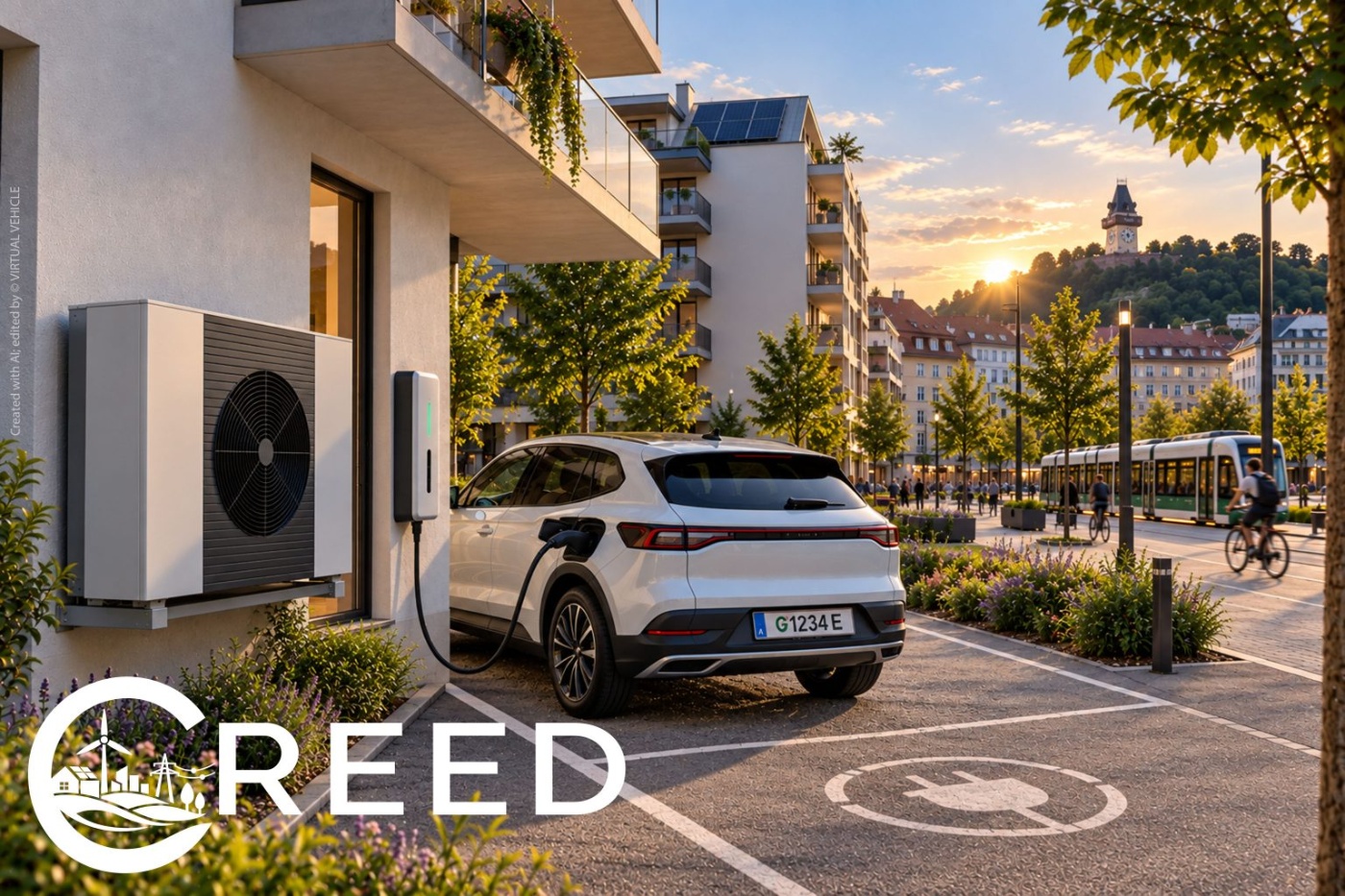
The European research project CREED is exploring how electric vehicles, heat pumps, and battery storage systems could help stabilize power grids in the future. The project focuses on intelligent energy management systems, artificial intelligence (AI), and digital twins to better align electricity consumption with power generation. The aim is to manage flexible electricity loads more effectively, make more efficient use of renewable energy, and reduce strain on power grids.
To achieve this, the project partners are developing new forecasting and optimization methods to predict electricity generation, energy demand, and available flexibility. Digital twins create virtual representations of electric vehicles, heat pumps, and thermal energy storage systems, allowing researchers to evaluate different operating strategies. The project also uses mathematical optimization methods and reinforcement learning. These technologies could, for example, coordinate EV charging processes to account for both grid requirements and user needs. CREED is also exploring opportunities for the local coordination and commercialization of energy flexibility.
The technologies developed through the project will be tested under real-world conditions at seven pilot sites in Austria, Germany, Portugal, and the Czech Republic. A total of nine European research and industry partners are participating in the project. The consortium is coordinated by the Austrian research center VIRTUAL VEHICLE, based in Graz, which is particularly responsible for developing AI-based control and optimization methods as well as digital twins. The results are expected to demonstrate how flexible energy consumers can be more closely integrated into smart grids in the future.