








IAA MOBILITY Weekly
The mobility highlights of week 23/2026
SEAT, CUPRA, Volkswagen, Uber, Autobrains, WeRide, Vattenfall, Hyundai, Kia
- IAA MOBILITY Weekly
- 23/2026

SEAT’s Martorell plant starts production of the CUPRA Raval and Volkswagen ID. Polo, Uber, Autobrains, and NVIDIA plan robotaxi service in Munich, WeRide and Uber plan first joint robotaxi project in Europe, and Vattenfall, Hyundai, and Kia launch vehicle-to-grid pilot project in the Netherlands - these are our top stories for week 23 of 2026.
SEAT’s Martorell plant starts production of the CUPRA Raval and Volkswagen ID. Polo, Uber, Autobrains, and NVIDIA plan robotaxi service in Munich, WeRide and Uber plan first joint robotaxi project in Europe, and Vattenfall, Hyundai, and Kia launch vehicle-to-grid pilot project in the Netherlands - these are our top stories for week 23 of 2026.
- 1. SEAT’s Martorell Plant Starts Production of the CUPRA Raval and Volkswagen ID. Polo
- 2. Uber, Autobrains, and NVIDIA Plan Robotaxi Service in Munich
- 3. WeRide and Uber Plan First Joint Robotaxi Project in Europe
- 4. Vattenfall, Hyundai, and Kia Launch Vehicle-to-Grid Pilot Project in the Netherlands
- 5. i-charging presents 500 kW charging system for passenger cars and commercial vehicles
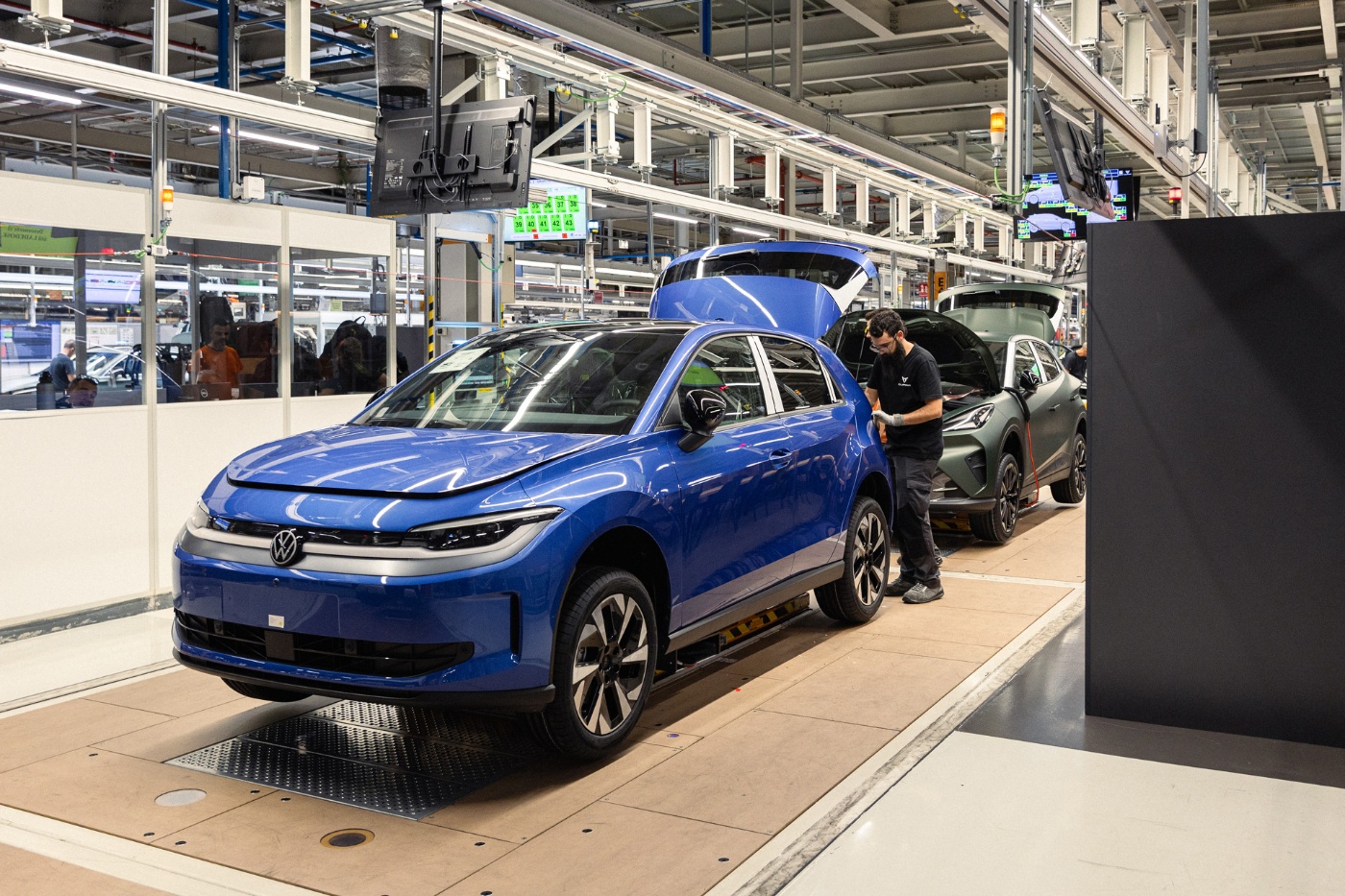
The Martorell plant, operated by SEAT and CUPRA, has begun series production of the all-electric CUPRA Raval and the Volkswagen ID. Polo. Both models are core components of the Volkswagen Group’s “Electric Urban Car Family” and are designed to make electric mobility more affordable in the high-volume segment.
With this production launch, Martorell continues its transformation into an electric vehicle facility. Battery systems with a capacity of up to 300,000 units per year have already been manufactured at the plant since March. The CUPRA Raval and the Volkswagen ID. Polo are the first of four compact electric vehicles to be fully developed and produced in Spain. They will be followed by the Volkswagen ID. Cross and the Škoda Epiq.
These two models hold high strategic importance for the Volkswagen Group: with starting prices under 25,000 euros for the ID. Polo and around 26,000 euros for the CUPRA Raval, they aim to attract new customer segments to electromobility. The first deliveries are scheduled for the second half of 2026.

Uber, Autobrains, and NVIDIA have announced a partnership to introduce a robotaxi service in Munich, Germany. Unveiled at NVIDIA GTC Taipei, the project—subject to regulatory approvals—is designed to enable the deployment of a commercially scalable autonomous driving service in Europe.
The goal is to create a manufacturer-independent robotaxi model that can be deployed across various vehicle platforms. The autonomous driving intelligence is provided by Autobrains and relies on an agent-based AI approach, where specialized AI agents analyze individual driving tasks and traffic situations to make real-time decisions.
The software runs on the NVIDIA DRIVE Hyperion platform, a Level 4 architecture for autonomous mobility services. Using standardized sensor systems and automotive-grade computing hardware, the technology is designed to be cost-effectively adaptable to different vehicle models.
Uber is contributing its global ride-hailing network, allowing users to book the robotaxis directly through the Uber app. Looking ahead, the partners aim to establish an open platform model that connects vehicle manufacturers, autonomous driving technologies, and mobility services, making it easier to scale autonomous driving services into additional cities.
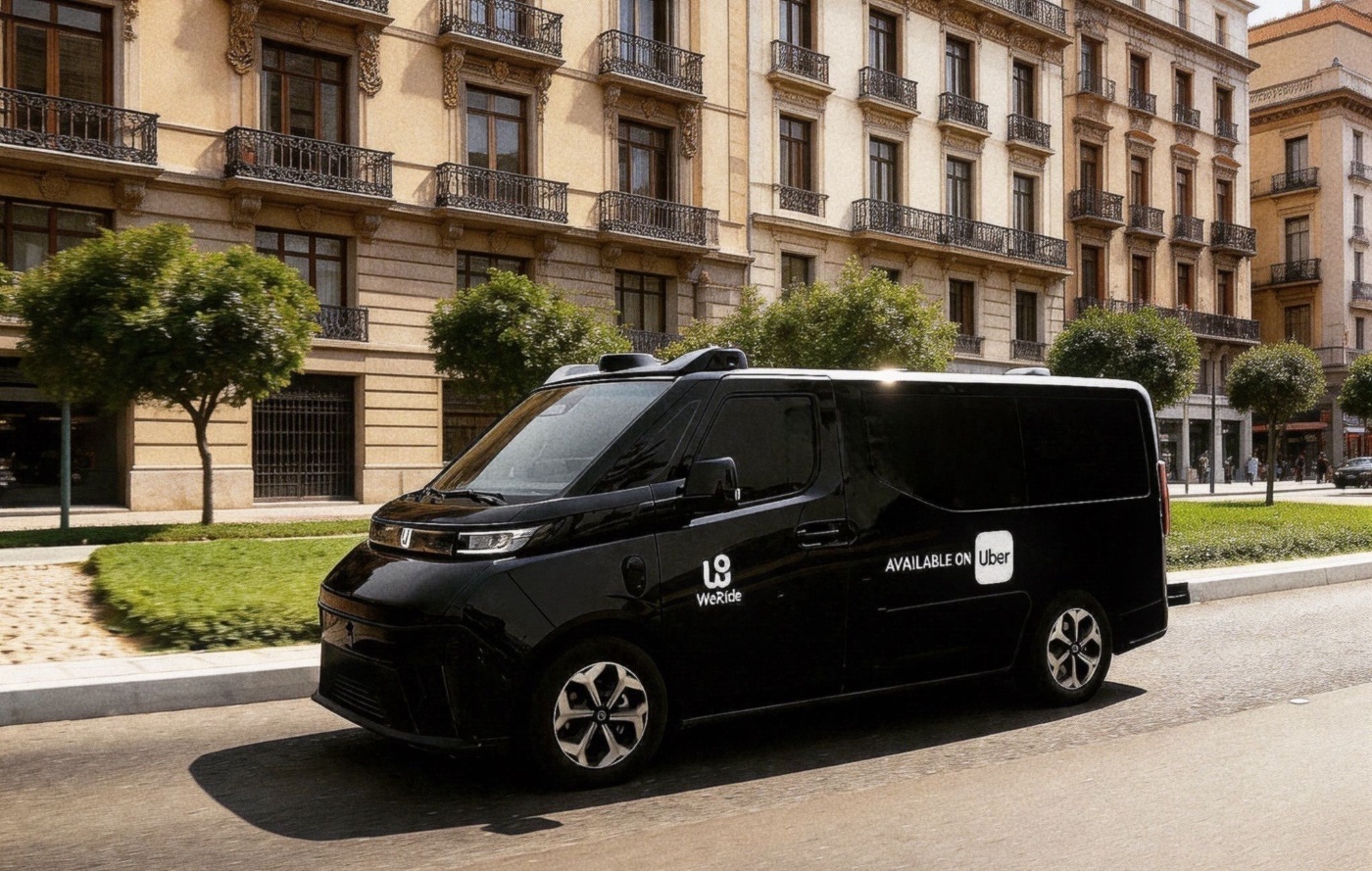
Chinese tech company WeRide and Uber are launching their first joint robotaxi project in Europe. The commercial pilot service is set to launch in the Madrid region before the end of 2026, with rides bookable directly via the Uber app.
At launch, the autonomous vehicles will operate with safety drivers on board. However, the partners plan to transition to fully driverless robotaxi services in the long run. In cooperation with AVOMO, a subsidiary of the Moove Cars Group, the fleet is expected to gradually expand to several hundred vehicles.
The technology is powered by the WeRide One autonomous driving platform and the GENESIS simulation environment, which is used to train and optimize driving functions. The project builds on the partners' previous deployments in Abu Dhabi and Dubai, where commercial robotaxi services are already in operation.
This makes Madrid the first European city to be included in the strategic partnership between WeRide and Uber. By 2030, the companies aim to establish robotaxi services in a total of 15 cities, with long-term plans to deploy tens of thousands of autonomous vehicles worldwide.
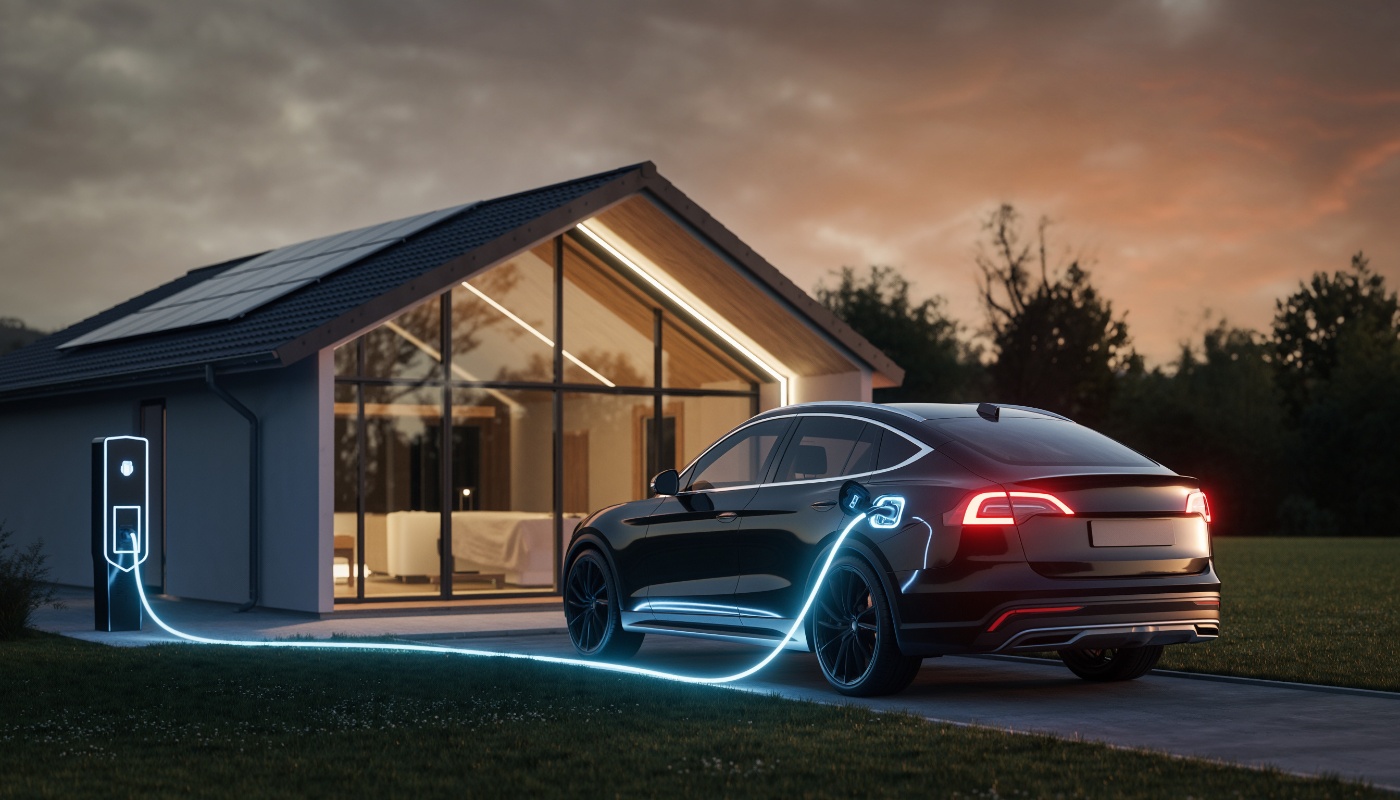
Energy provider Vattenfall and Hyundai Motor Group are launching a pilot project in Utrecht to integrate electric vehicles into the power grid. Up to 80 households will use vehicles like the Kia EV9 and the Hyundai IONIQ 9 as mobile energy storage units.
The project centers on Vehicle-to-Grid (V2G) technology, which enables bidirectional charging. This allows excess electricity from renewable energy sources to be stored in the vehicle batteries and fed back into the grid during periods of peak demand. In addition to the vehicle, participants receive a bidirectional wallbox and an intelligent energy management system.
The goal of the six-month project is to investigate the potential of electric vehicles as decentralized energy storage systems. The stored energy is intended to help relieve grid congestion, particularly during evening hours. Vattenfall is handling the installation of the charging infrastructure and will reimburse electricity costs up to 500 Euros.
The project is part of Hyundai Motor Group’s Vehicle-to-Everything (V2X) strategy, which aims to integrate electric vehicles more deeply into smart energy systems moving forward.
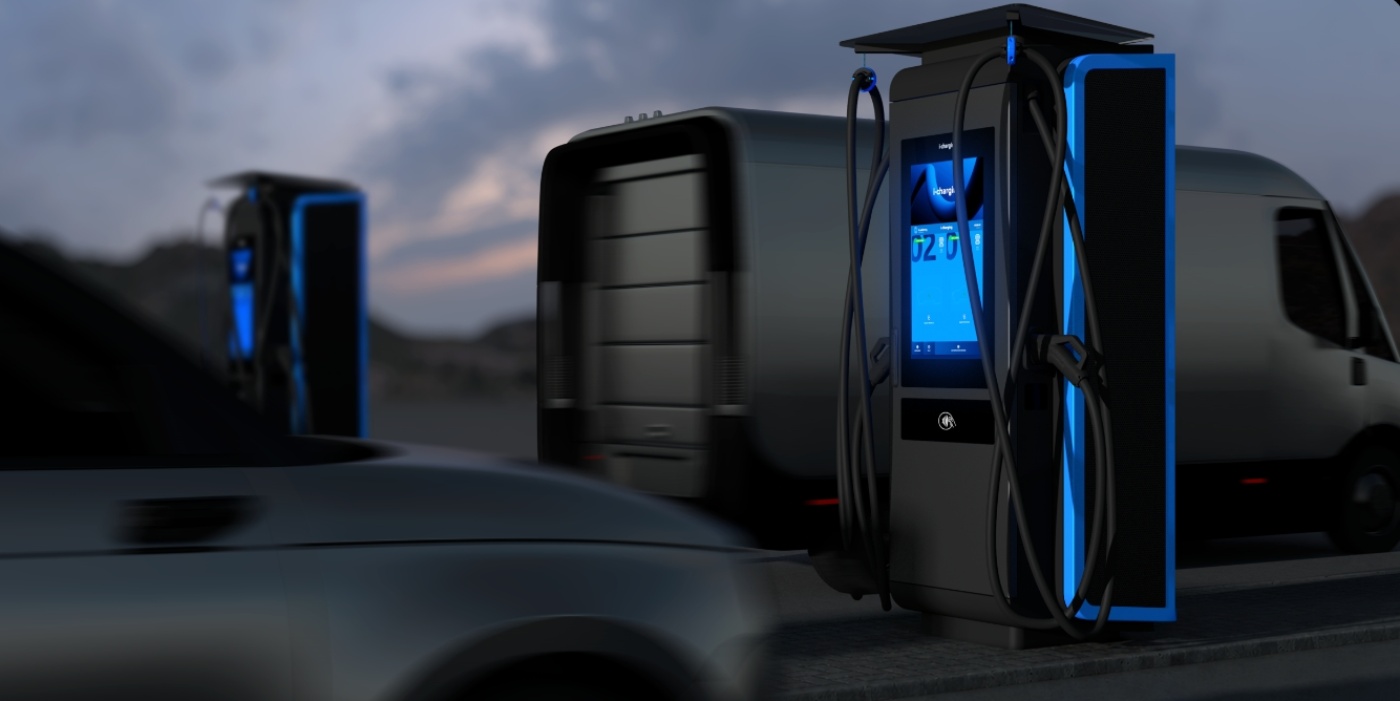
i-charging has announced the all-in-one 500 (AiO 500), a standalone EV charger that delivers 500 kW from a single compact unit. The solution was designed for highway corridors, fuel station replacements, and high-density urban locations where both maximum power and minimal footprint are critical, with support for CCS, NACS and GB/T for deployment across multiple markets.
The AiO 500 has two outputs and distributes power dynamically between them, based on what each connected vehicle is drawing at any given moment. No operator input is required. The total 500 kW capacity remains available regardless of how demand is split between the two connectors.
The 500 kW ceiling is relevant as a growing number of production electric vehicles now support charging rates at or above 400 kW. Where a site has an all-in-one unit capped at that level, a single vehicle charging at full rate occupies the full installed capacity. AiO 500 is sized to serve both outputs at high power simultaneously.
All-in-one 500 incorporates i-charging’s patented dynamic power allocation technology, distributing available power between both outputs in real time based on vehicle demand.
When two vehicles are connected, power is allocated based on what each can receive at that moment. If one vehicle requires higher power than the other, the system adjusts accordingly. This improves utilisation of installed capacity and supports shorter charging sessions.
The 500 kW total output is aligned with the increasing charging capabilities of next-generation electric vehicles, allowing high-power charging on one output while maintaining full availability on the second.
The standard cable configuration supports sustained delivery up to 500 A. An optional liquid-cooled cable version is available for applications requiring higher sustained current. Commercial and heavy-duty vehicles require higher sustained current over longer periods than standard cables can reliably deliver. With liquid-cooled cables, the AiO 500 is suited to freight, coach and heavy transport operations alongside passenger vehicle charging, from a single compact unit.
The AiO 500 comes with the same 32" touchscreen, contactless card reader, and optional bank card terminal as the rest of our standalone solutions. Plug&Charge and Autocharge are supported. It runs OCPP 1.6 and 2.0.1 and connects via 4G modem or Ethernet. Operators managing existing i-charging chargers through my.i-charging will find the all-in-one 500 on the same platform.
First deliveries of the AiO 500 are scheduled to begin at the end of 2026 for CE markets and 2027Q1 for North America and Eichrecht markets. i-charging is currently working with early adopters to finalise deployment specifications and secure installation slots.