








IAA MOBILITY Weekly
Mobility Highlights of the Week 19, 2026
Toyota, Skoda, Nissan, Tovion, Rocsys
- IAA MOBILITY Weekly
- 19/2026

Toyota celebrates the world premiere of the all-electric Lexus TZ SUV, Škoda offers a first look at the interior of the new Epiq, Nissan introduces the updated Nissan Ariya, Tovion presents a passenger car trailer with its own electric drive, and Rocsys unveils an automated multi-charging system for robotaxi fleets—these are our top news stories for Week 19 of 2026.
Toyota celebrates the world premiere of the all-electric Lexus TZ SUV, Škoda offers a first look at the interior of the new Epiq, Nissan introduces the updated Nissan Ariya, Tovion presents a passenger car trailer with its own electric drive, and Rocsys unveils an automated multi-charging system for robotaxi fleets—these are our top news stories for Week 19 of 2026.
- 1. Toyota Celebrates World Premiere of the All-Electric Lexus TZ SUV with Three Rows of Seating
- 2. Škoda Reveals Interior of the New Epiq for the First Time
- 3. Nissan Introduces Updated Nissan Ariya
- 4. Tovion Presents Passenger Car Trailer with its Own Electric Drive
- 5. Rocsys Presents Automated Multi-Charging System for Robotaxi Fleets
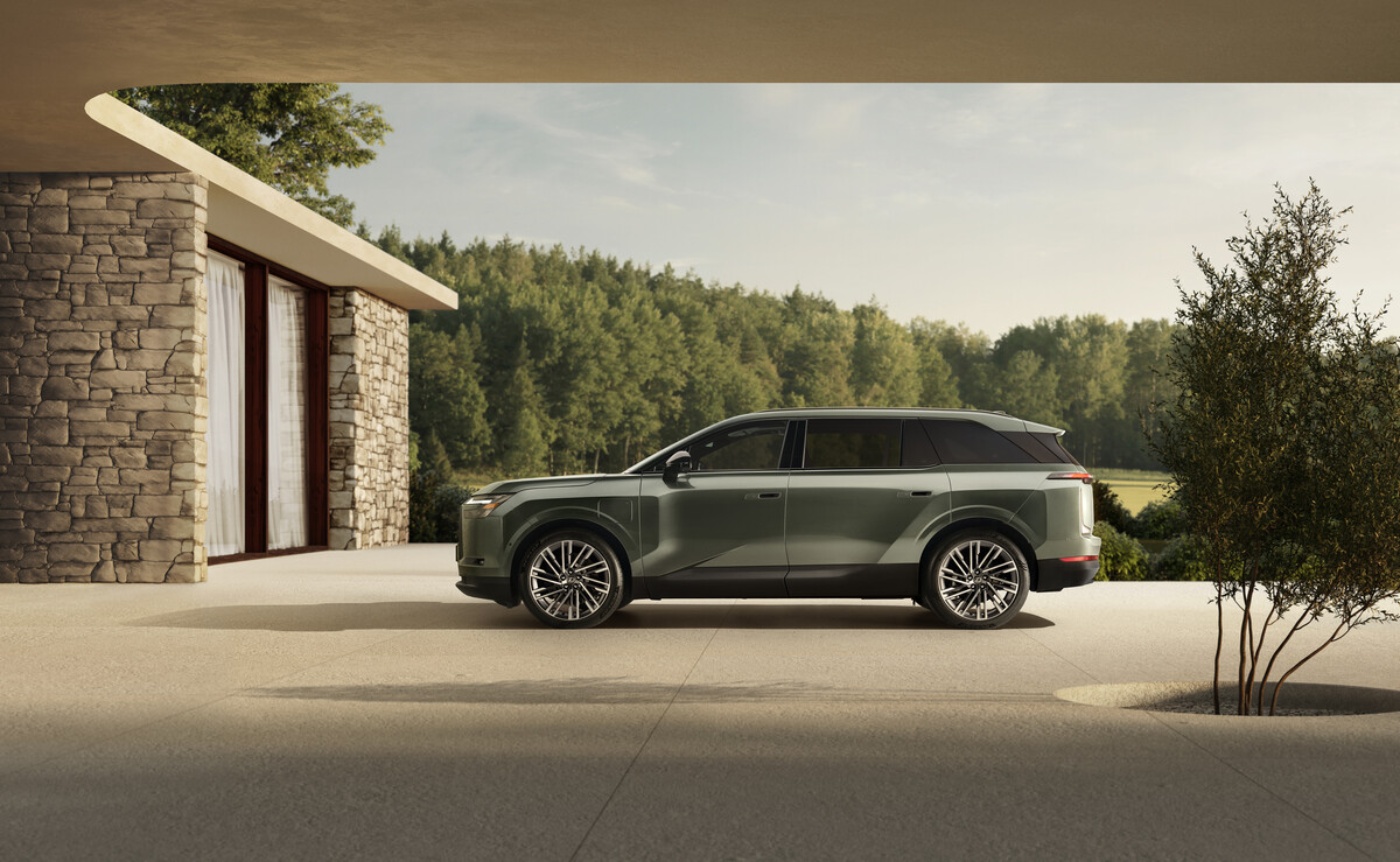
Toyota’s Lexus brand has unveiled its first all-electric luxury SUV with three rows of seating: the new Lexus TZ. Scheduled to be available in Europe starting in 2027, the model combines a spacious lounge concept with modern electric mobility.
The centerpiece is an exceptionally large interior featuring six individual seats, a vast panoramic roof, and comfort features such as heated and ventilated seats, ottoman leg rests, and infrared heating in the front area. High-quality materials like bamboo composites and recycled aluminum highlight the vehicle's premium standards.
In terms of digital features, Lexus utilizes a 12.3-inch instrument cluster, a 14-inch multimedia display, cloud-based navigation, over-the-air updates, and connected services via the LexusLink+ app. A 21-speaker Mark Levinson sound system can optionally be added.
The powertrain offers two battery sizes: 77 kWh and 95.8 kWh. Depending on the version, the range is expected to reach up to 540 kilometers (approx. 335 miles). The TZ 450e delivers 230 kW, while the TZ 550e—boasting 300 kW and all-wheel drive—accelerates from 0 to 100 km/h (62 mph) in 5.2 seconds.
Charging is supported at up to 22 kW AC and 150 kW DC, allowing the battery to charge from 10% to 80% in approximately 30 minutes.
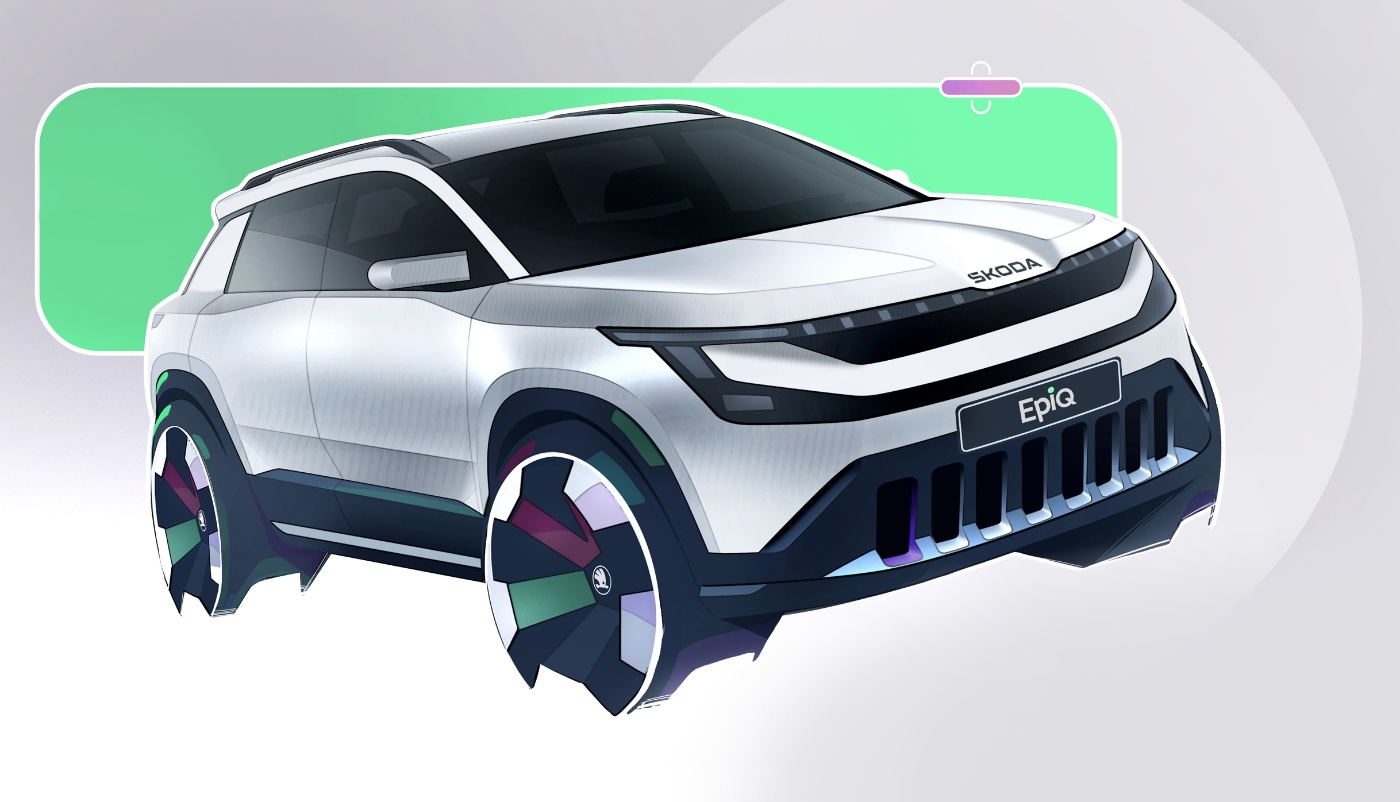
Škoda has released a first look at the interior of the new Škoda Epiq. The all-electric model will be officially presented on May 19 and is part of the Volkswagen Group’s "European Urban Car Family" within the Brand Group Core.
The Epiq will be the brand's first production model to fully implement the new "Modern Solid" design language in its interior. Škoda focuses on a minimalist, clearly structured design with a horizontal interior architecture intended to create an especially open perception of space. The concept is complemented by ambient lighting and sustainable materials.
In addition to design, the focus is heavily on everyday practicality. A streamlined and intuitive control structure, open storage areas, and a free-standing center console with wireless smartphone charging are designed to enhance comfort and user-friendliness.
With the Epiq, Škoda aims to make electric mobility more accessible and practical for a broader target audience.
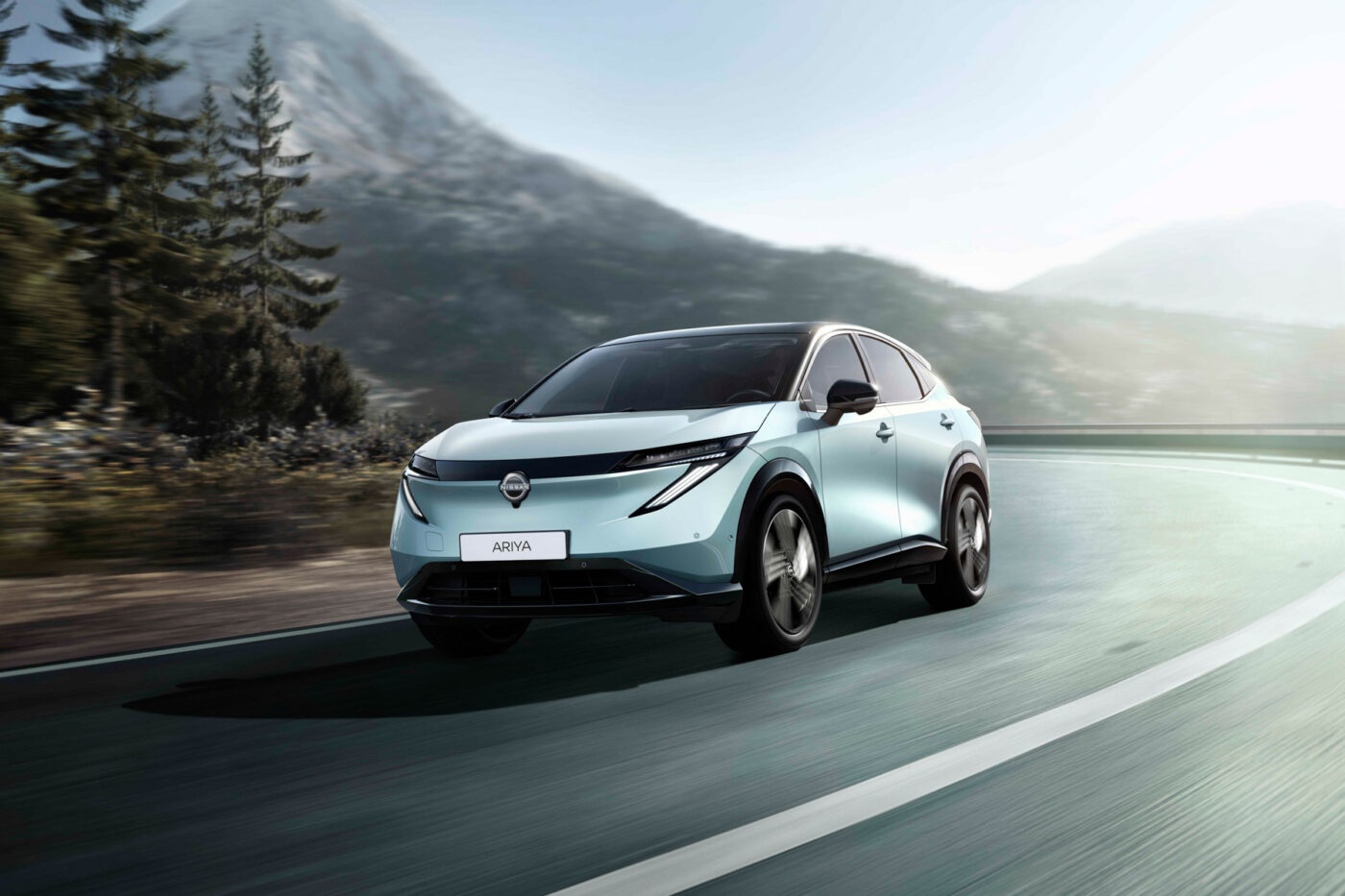
Nissan has comprehensively updated the Nissan Ariya for the new facelift, equipping the electric crossover with a modernized design, new connectivity functions, and additional comfort features.
At launch, a front-wheel-drive variant with 178 kW of power and an 87 kWh battery will be available, alongside the all-wheel-drive Ariya e-4ORCE with 225 kW. Visually, the model remains true to the "Japanese Futurism" design language but receives a redesigned front end with cleaner lines and a more modern appearance.
Technically, the new generation of Nissan Connect takes center stage. For the first time, Nissan is integrating comprehensive Google services directly into the vehicle, including Google Maps with voice control via "Hey Google." Another new standard feature is the Vehicle-to-Load (V2L) function, which can power external devices such as e-bikes or camping equipment with up to 3.7 kW.
The Ariya charges at up to 11 kW AC and 130 kW DC. Furthermore, Nissan has further optimized the chassis and assistance systems. The ProPILOT system improves functions such as braking, acceleration, and lane-keeping.
Also new on board is an eight-camera Around View Monitor with 3D display, T-junction assistant, and a "transparent hood" feature designed to make maneuvering in tight situations easier.
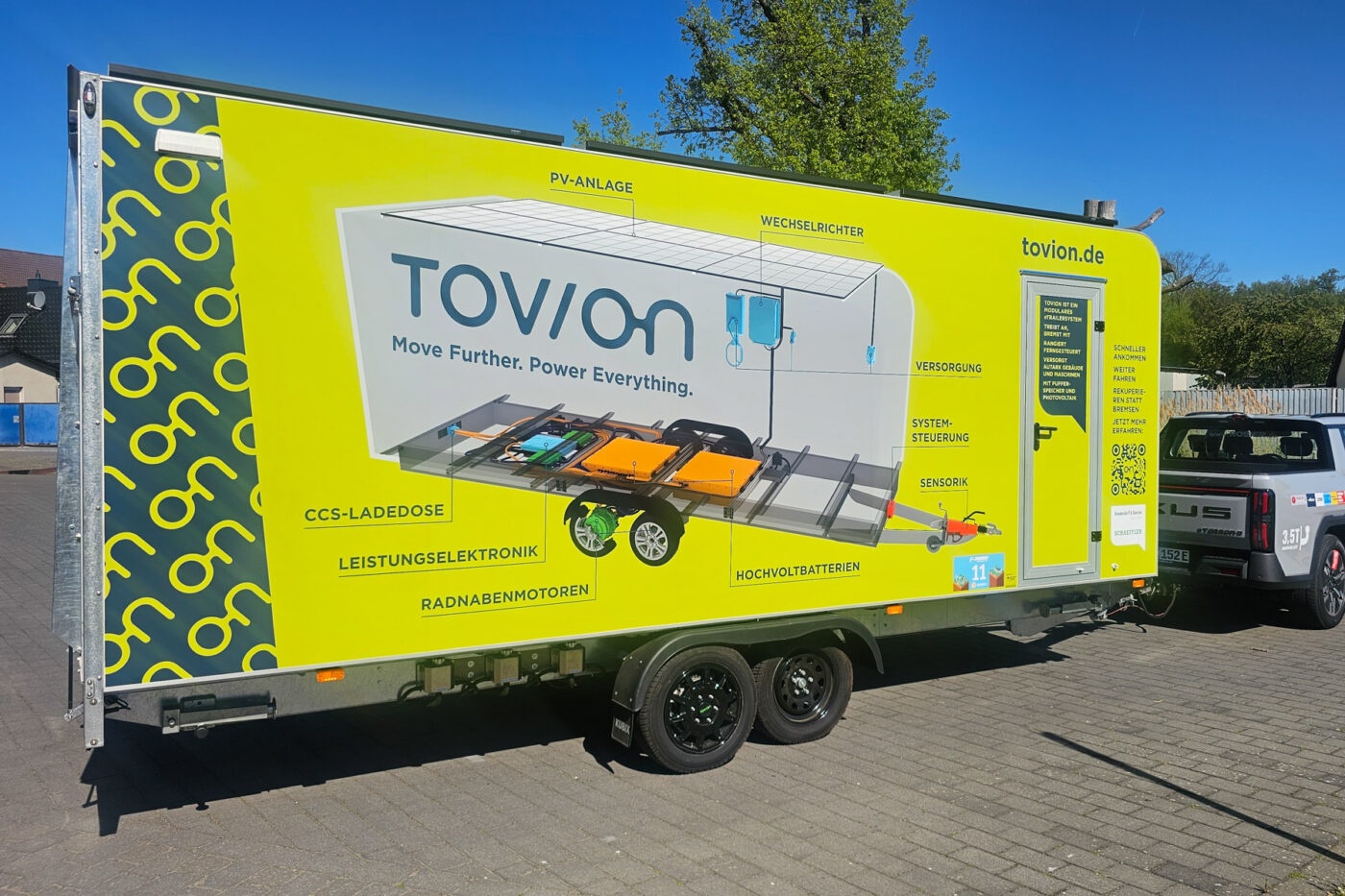
The German company Tovion has introduced a passenger car trailer equipped with its own electric drive, designed to actively support electric vehicles while towing. The goal is to significantly reduce the range loss typically experienced during trailer operation.
The trailer features an electrified axle system with its own battery and power electronics. Sensors detect acceleration and braking of the tractor and automatically control the electric motors to reduce the load on the vehicle while improving driving stability and efficiency.
The system is intended to be compatible with both electric cars and internal combustion engine vehicles, targeting caravan users, tradespeople, and leisure customers with high transport requirements.
Additionally, the trailer can be used as a mobile power source. Integrated power outlets can supply external devices or camping equipment. Looking ahead, Tovion is also exploring bidirectional energy functions and energy exchange during travel.
For example, the modular system allows for battery capacities to be implemented in 25 kWh increments, with the range depending entirely on the assist settings and how it pairs with the towing vehicle. Different configurations can be set up here to optimize for each specific type of use.
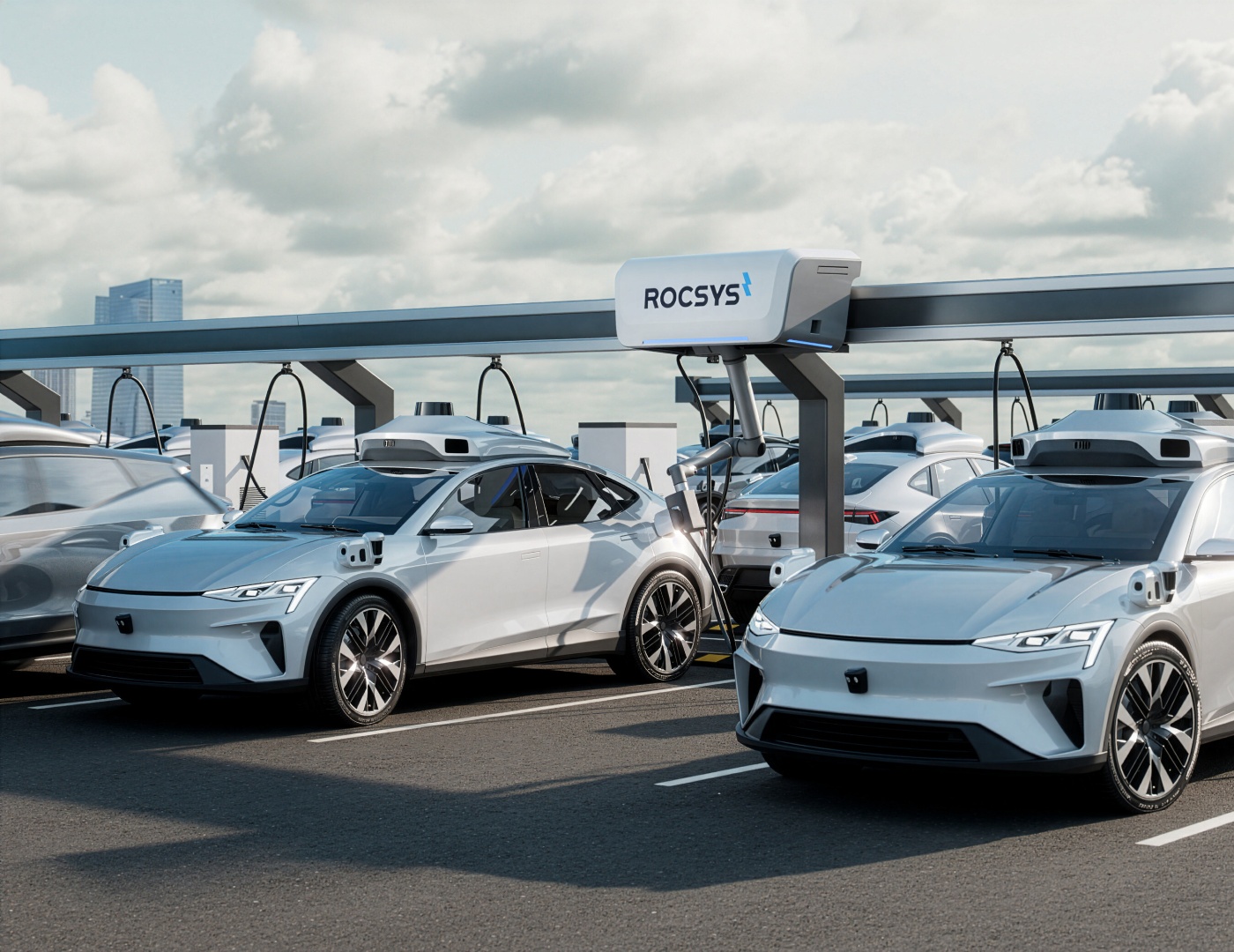
The Dutch-American company Rocsys has introduced the Rocsys M1, an automated multi-charging solution for robotaxi fleets. The system is designed to solve a central bottleneck in autonomous mobility: the manual connection of electric vehicles to charging points.
The core of the system is a rail-guided robotic arm installed above the charging areas that can service up to ten charging bays. Using AI-powered computer vision, the robot identifies the vehicle's position, opens the charging flap if necessary, and independently connects the vehicle to the charging cable.
The Rocsys M1 is designed for mixed fleets and is intended to be compatible with different vehicle types, plugs, and charging infrastructures. This allows operators to flexibly combine various vehicles and charging systems.
The technology is currently in pilot projects, with a large-scale rollout in Europe and North America planned for 2027. Rocsys aims to support the scaling of autonomous robotaxi fleets and fully automate the charging process.