

Technology
POSCO and Hyundai Develop High-Efficiency Electrical Steel for EVs
Image: (c) POSCO
POSCO, alongside Hyundai Motor and eight other industrial, research, and academic partners, has launched a national research project to develop a new generation of electrical steel for electric vehicles. The goal of the collaboration is to develop electrical steel with a 6.5 percent silicon content while simultaneously establishing manufacturing technologies for highly efficient electric motors. This next generation of material aims to significantly boost the energy efficiency of EVs.
POSCO, alongside Hyundai Motor and eight other industrial, research, and academic partners, has launched a national research project to develop a new generation of electrical steel for electric vehicles. The goal of the collaboration is to develop electrical steel with a 6.5 percent silicon content while simultaneously establishing manufacturing technologies for highly efficient electric motors. This next generation of material aims to significantly boost the energy efficiency of EVs.
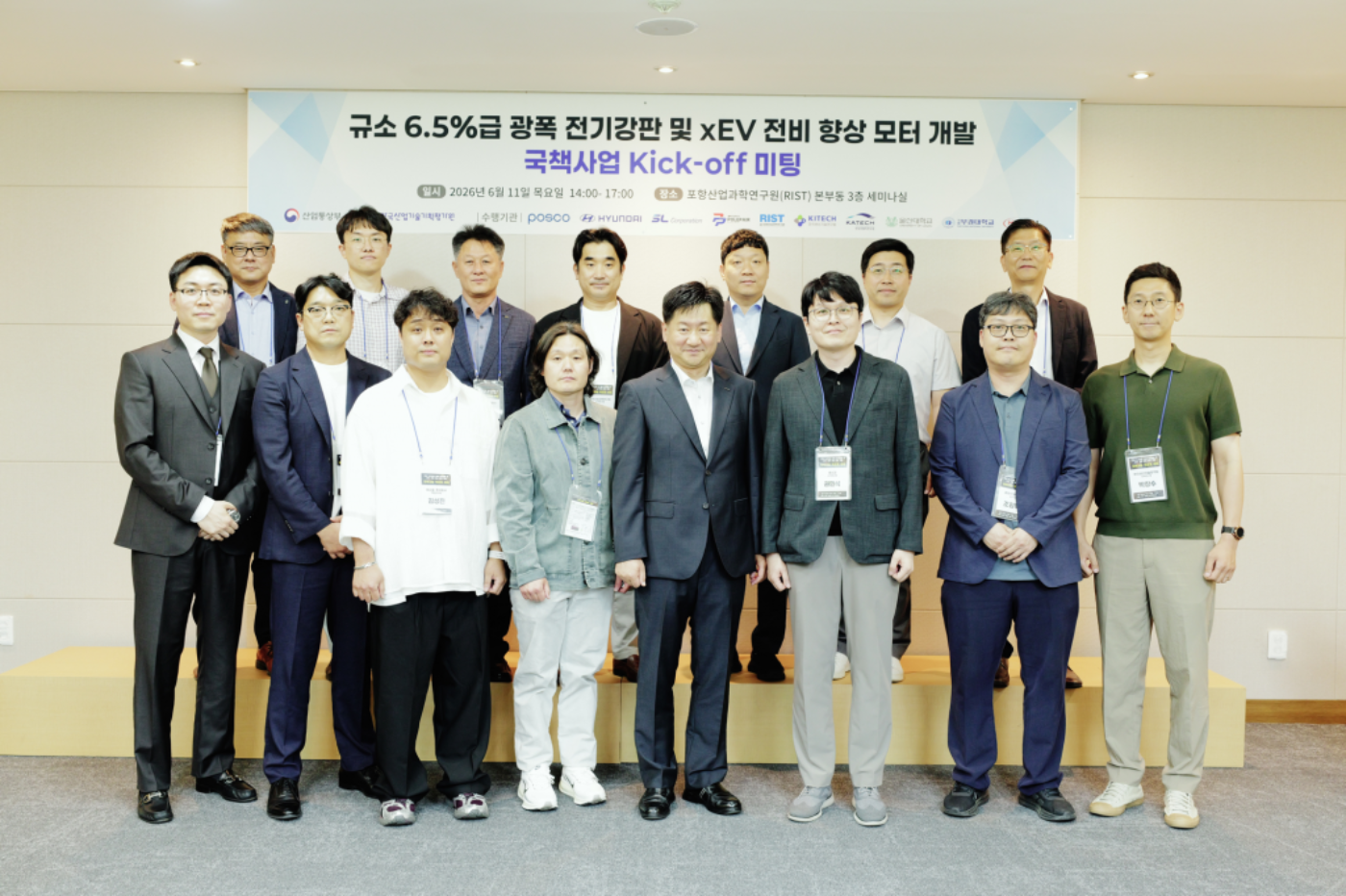
The research project, titled "Development of 6.5% Silicon-content Wide Electrical Steel Sheet and EV Efficiency-Enhancing Core and Drive Motor Manufacturing Technologies," officially kicked off on June 11 at the Research Institute of Industrial Science & Technology (RIST) in Pohang. POSCO is leading the project. The ten project partners include Hyundai Motor Company, SL Corporation, Polepair Electric, the RIST research institute, the Korea Institute of Industrial Technology (KITECH), the Korea Automotive Technology Institute (KATECH), as well as several universities and research institutions.
Focus on High-Silicon Electrical Steel
The project centers on the development of electrical steel with a 6.5 percent silicon content. Electrical steel is a core material for electric motors because it optimizes magnetic flux within the motor. A higher silicon content reduces what is known as core loss (iron loss), which occurs particularly at high RPMs, thereby improving the drivetrain's efficiency.
However, manufacturing such a material is considered highly complex. As the silicon content increases, the steel becomes more brittle and harder to process. In particular, producing thin, wide sheets for mass production presents a technical challenge that numerous steelmakers worldwide are currently working to solve.
Development Across the Entire Value Chain
Following the project launch, the participating organizations signed a joint Memorandum of Understanding (MoU) to formalize their collaboration. The plan outlines an end-to-end development approach spanning the entire value chain—from material development and the manufacturing of motor cores and drive motors to testing the new technology in actual electric vehicles.
Supported by the South Korean Ministry of Trade, Industry and Energy, the research project is designed not only to yield new materials but also to prove their viability under real-world operating conditions. With this initiative, POSCO aims to strengthen the competitiveness of the domestic steel and automotive industries and secure a leading position in the growing global e-mobility market.